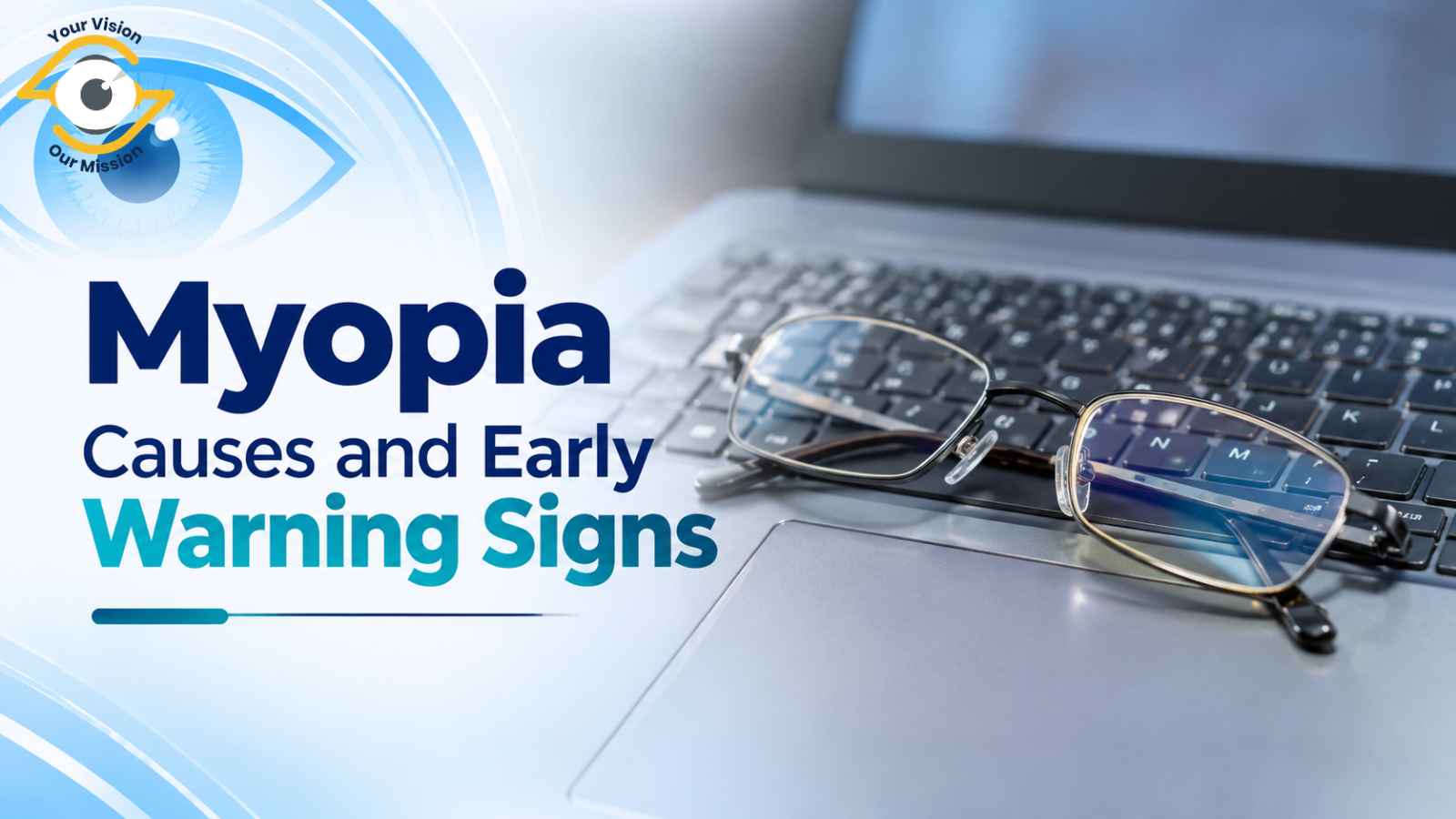
When children begin struggling to see distant objects clearly, parents may initially assume they need stronger glasses. However, increasing nearsightedness, also known as myopia, can indicate that their prescription is progressing. Childhood myopia deserves attention because it may continue to worsen as the eyes grow. The right myopia control programs can help slow this progression and reduce the risk of developing high myopia later in life. Consulting an experienced eye specialist in Ahmedabad can help parents understand their child's condition and available treatment options.
Why Is Childhood Myopia a Growing Concern?
Myopia develops when the eye grows too long or its optical power causes light to focus in front of the retina instead of directly on it. Children with myopia may struggle to read classroom boards, recognise distant objects, or participate comfortably in outdoor activities.
Common signs parents should watch for include:
Squinting to see distant objects
Sitting unusually close to screens or televisions
Holding books very close to the face
Frequent headaches or eye strain
Complaints of blurred distance vision
Regular changes in spectacle prescriptions
An eye specialist in Ahmedabad can perform a comprehensive examination to identify myopia and monitor changes in a child's prescription.
What Are Myopia Control Programs?
Unlike ordinary glasses that primarily correct blurred vision, myopia control programs aim to slow the progression of nearsightedness. These approaches may combine specialised lenses, eye drops, and lifestyle changes depending on the child's age, prescription, and rate of progression.
The goal is to manage eye growth and reduce the likelihood of high myopia, which is associated with an increased risk of retinal complications, glaucoma, and other eye conditions.
Which Myopia Control Treatments Actually Work?
Treatment should be selected according to the child's individual needs. Common evidence-based options include:
Low-dose atropine eye drops: These may help slow myopia progression in children. The concentration and treatment schedule should be determined by an eye specialist.
Orthokeratology lenses: Specially designed contact lenses worn overnight temporarily reshape the cornea and may help control myopia progression.
Multifocal contact lenses: These lenses provide different focusing zones that can help manage the progression of childhood myopia.
Myopia-control spectacle lenses: Special optical designs can help slow the rate at which myopia progresses.
Outdoor activities: Spending more time outdoors, particularly in natural daylight, may help reduce the risk of developing myopia.
A high myopia correction doctor can evaluate the child's prescription and recommend suitable treatment based on clinical findings. These approaches do not guarantee that myopia will stop completely, but they can help manage its progression.
Why Is Early Intervention Important?
Myopia often progresses during childhood and adolescence, making regular eye examinations important. Starting treatment early may provide more opportunities to slow prescription changes before severe nearsightedness develops.
A high myopia correction doctor can monitor axial eye length, prescription changes, and treatment response. Parents should also understand that myopia control is generally a long-term process requiring consistent monitoring and adjustments.
How Can Parents Support Their Child's Eye Health?
Medical treatment works best when supported by healthy daily habits. Parents can encourage children to:
Spend regular time outdoors.
Take breaks during prolonged screen use and reading.
Maintain a comfortable reading distance.
Use appropriate lighting while studying.
Attend scheduled eye examinations.
Follow prescribed treatment consistently.
An eye specialist in Ahmedabad can help families create a practical eye-care routine alongside the recommended treatment plan.
What Happens If Myopia Progresses to High Myopia?
High myopia involves a significantly elevated degree of nearsightedness and may increase the risk of serious eye conditions, including retinal detachment, myopic macular degeneration, and glaucoma.
A high myopia correction doctor can assess the severity of the condition, recommend appropriate vision correction, and monitor the retina for potential complications. Even when a child already has a high prescription, managing further progression remains important.
Parents should remember that correcting vision with glasses or contact lenses is different from controlling the underlying progression of myopia.
Give Your Child a Clearer Vision Journey
Childhood myopia requires attention, regular monitoring, and an appropriate treatment strategy. With timely diagnosis and suitable myopia control programs, parents can take proactive steps to manage prescription progression and support long-term eye health.
Dr. Sahil Shah provides specialised ophthalmic care and personalised guidance for children and adults experiencing vision concerns. If your child's spectacle prescription is increasing or distant vision is becoming blurry, contact us to schedule a comprehensive eye examination and discuss suitable treatment options with an experienced high myopia correction doctor and eye specialist in Ahmedabad.