
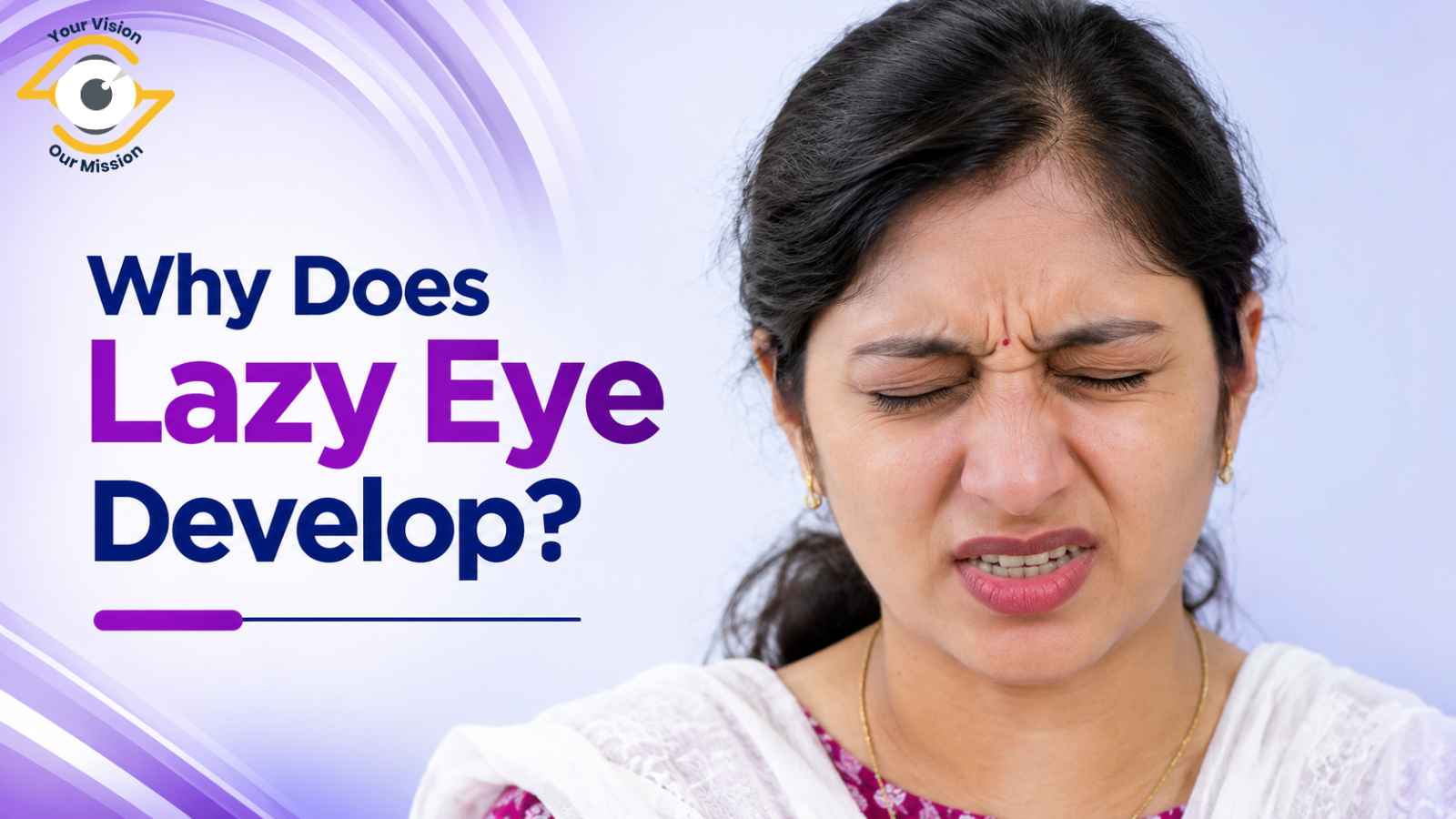
When one eye does not develop normal vision during childhood, the brain may gradually begin relying more heavily on the other eye. This condition, known as amblyopia or lazy eye, can affect depth perception and overall visual development. Often described as having one eye left behind, amblyopia is more than an ordinary vision problem because it involves how the brain processes information received from the eyes. Early diagnosis and appropriate treatment can make a significant difference. Consulting an experienced ophthalmologist in Ahmedabad can help parents understand the condition and explore suitable treatment options.
What Is Amblyopia?
Amblyopia develops when the visual pathways between one eye and the brain do not develop normally during childhood. As a result, the affected eye has reduced vision that cannot always be corrected fully with ordinary glasses or contact lenses.
The brain gradually favours the stronger eye and may suppress signals from the weaker one. This is why the condition is sometimes described as one eye left behind during visual development.
A comprehensive examination by an eye specialist in Ahmedabad can help identify amblyopia and distinguish it from other causes of reduced vision.
What Causes Lazy Eye?
Amblyopia usually develops during early childhood when the brain receives unclear or unequal visual information from the two eyes. Common causes include:
Strabismus: When the eyes are misaligned, the brain may suppress information from one eye to avoid double vision.
Refractive differences: A significant difference in prescription between the eyes can cause one eye to provide consistently blurrier images.
Uncorrected refractive errors: High degrees of nearsightedness, farsightedness, or astigmatism can interfere with normal visual development.
Visual obstruction: Conditions such as childhood cataracts or drooping eyelids may prevent clear images from reaching the retina.
An ophthalmologist in Ahmedabad can assess these underlying factors and recommend appropriate treatment based on the child's visual development.
What Symptoms Should Parents Look For?
Children may not realise that their vision is different because they have adapted to seeing primarily through their stronger eye. Parents should watch for signs such as:
Frequent squinting or closing one eye
Difficulty judging distances
Poor depth perception
Head tilting while looking at objects
One eye appearing misaligned
Difficulty recognising objects at a distance
Struggling with reading or other visual activities
If these signs are noticeable, an eye specialist in Ahmedabad should evaluate the child's vision. Early assessment can help prevent the weaker eye from falling further behind.
How Is Amblyopia Diagnosed?
Diagnosis generally involves checking visual acuity in each eye, assessing eye alignment, and evaluating how both eyes work together. The doctor may also perform a refraction test and examine the structures of the eyes to identify any underlying condition.
A detailed examination by an ophthalmologist in Ahmedabad helps determine the type and severity of amblyopia. Since children may not communicate vision difficulties clearly, age-appropriate screening and regular eye examinations are particularly important.
What Treatment Options Are Available?
Amblyopia treatment aims to improve vision in the weaker eye by correcting the underlying problem and encouraging the brain to use that eye.
Common treatment approaches include:
Prescription glasses: Correct refractive errors that interfere with clear vision.
Eye patching: Covering the stronger eye for a prescribed period encourages the weaker eye to work.
Atropine eye drops: Temporarily blur vision in the stronger eye to encourage use of the affected eye.
Treatment of underlying conditions: Correcting cataracts, drooping eyelids, or eye misalignment when necessary.
Vision-based therapies: Selected activities may support treatment when recommended by a specialist.
Treatment is generally most effective when started early, although some older children and adults may also experience improvement. An eye specialist in Ahmedabad can explain realistic expectations and develop an individual treatment plan.
Can Amblyopia Be Prevented?
Not every case can be prevented, but early detection can reduce the risk of long-term visual impairment. Parents should arrange routine childhood eye examinations rather than waiting for obvious symptoms.
Paying attention to unusual eye movements, squinting, or differences in how a child uses each eye can help identify problems sooner. Early treatment may prevent one eye left behind from affecting the child's visual development more significantly.
Give Both Eyes the Attention They Deserve
Amblyopia is a treatable childhood vision condition, particularly when identified early. Understanding its causes, recognising warning signs, and following the recommended treatment plan can help improve visual outcomes and support healthy development.
Dr. Sahil Shah provides specialised ophthalmic care and personalised guidance for children and adults experiencing vision concerns. If you notice signs of lazy eye or unequal vision in your child, contact us to schedule a comprehensive eye examination and discuss suitable treatment options with an experienced ophthalmologist in Ahmedabad and eye specialist in Ahmedabad.