

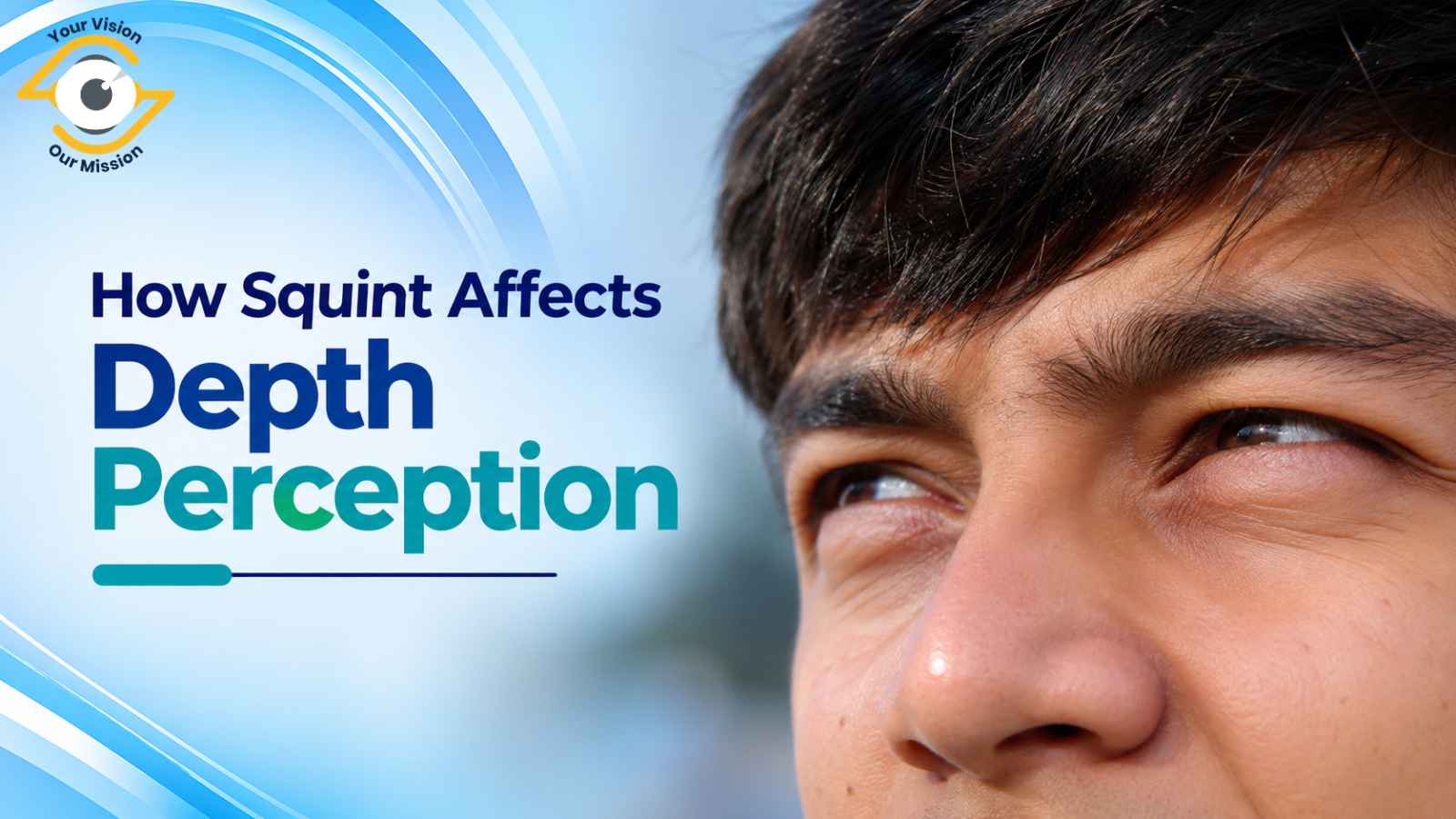
When people think about squint, they often associate it with childhood or changes in the appearance of the eyes. However, adult squint can affect much more than eye alignment. It may interfere with binocular vision, depth perception, daily activities, and emotional well-being. Some adults experience double vision, difficulty judging distances, or discomfort while reading and driving. Understanding these effects is important for seeking appropriate treatment. Consulting an experienced eye specialist in Ahmedabad can help identify the cause and explore suitable management options.
What Is Adult Squint?
Squint, medically known as strabismus, occurs when the eyes do not point in the same direction. One eye may turn inward, outward, upward, or downward while the other focuses on an object.
Adult squint can develop because of longstanding childhood misalignment or appear later due to changes involving the eye muscles, nerves, injuries, or certain medical conditions.
A comprehensive examination by an eye specialist in Ahmedabad can help determine the type of squint, its underlying cause, and whether additional investigations are necessary.
How Does Squint Affect Vision?
When the eyes are not aligned properly, they may send different images to the brain. Some adults experience double vision because the brain cannot comfortably combine these images. In other cases, the brain may suppress information from one eye to avoid seeing double.
Possible visual difficulties include:
Double vision when looking at certain objects
Eye strain during reading or screen use
Difficulty maintaining focus
Visual discomfort during everyday activities
Reduced coordination between both eyes
An eye specialist in Ahmedabad can assess these symptoms and determine whether they are related to eye misalignment or another vision problem.
Why Is Depth Perception Affected?
Depth perception helps people judge how far away objects are and understand their position in space. It depends partly on the brain combining slightly different images received from both eyes.
When eye alignment is disrupted, this process may become less accurate. Adults may find it difficult to judge distances while driving, walking down stairs, catching objects, or performing tasks that require precise hand-eye coordination.
A detailed assessment by a cornea specialist in Ahmedabad may be relevant when corneal conditions are also affecting visual quality. However, a cornea specialist evaluates the cornea, while squint diagnosis and alignment treatment require appropriate strabismus assessment.
How Can Adult Squint Affect Confidence?
Eye misalignment can influence how people feel about their appearance and how comfortably they interact with others. Some adults become self-conscious during conversations, photographs, or professional meetings. Persistent double vision and visual discomfort can also affect independence and daily routines.
It is important to recognise that these concerns are not merely cosmetic. Appropriate treatment may improve eye alignment, reduce symptoms, and support confidence.
What Causes Squint in Adults?
Several factors can contribute to eye misalignment later in life, including:
Childhood squint that was never fully corrected
Nerve conditions affecting eye movement
Thyroid-related eye disease
Eye or head injuries
Certain neurological conditions
Changes following previous eye surgery
Sudden-onset squint, particularly when accompanied by double vision, headache, dizziness, or other neurological symptoms, requires prompt medical evaluation. An eye specialist in Ahmedabad can assess the symptoms and determine whether urgent investigations are needed.
Can Adult Squint Be Treated?
Yes. Treatment depends on the type of misalignment, its severity, underlying cause, and whether the patient experiences double vision or other symptoms.
Available options may include:
Prescription glasses: Correct refractive errors that contribute to visual difficulties.
Prism lenses: Help manage double vision in selected cases.
Vision therapy: May benefit certain specific binocular vision problems.
Botulinum toxin injections: Used in selected cases to influence eye muscle activity.
Squint surgery: Adjusts the eye muscles to improve alignment.
An experienced eye specialist in Ahmedabad can recommend an appropriate treatment plan after evaluating the patient's eye movements and visual function.
When Should You Consult a Specialist?
Adults should not ignore persistent eye misalignment, double vision, or sudden changes in eye position. A cornea specialist in Ahmedabad may be involved if the patient also has corneal disease, scarring, or other corneal conditions affecting vision. However, corneal treatment alone does not correct the underlying eye muscle misalignment.
A cornea specialist in Ahmedabad can evaluate associated corneal concerns, while a squint specialist can assess alignment and discuss corrective treatment. Coordinated care may be helpful when multiple eye conditions are present.
Look Beyond Appearance and Prioritise Eye Health
Adult squint can affect visual comfort, depth perception, everyday activities, and confidence. It should not be dismissed as an appearance-related concern because appropriate diagnosis and treatment may improve both function and quality of life.
Dr. Sahil Shah provides specialised ophthalmic care and personalised guidance for patients experiencing eye alignment and vision concerns. If you notice eye misalignment, double vision, or difficulty judging distances, contact us to schedule a comprehensive eye examination and discuss suitable treatment options. An experienced eye specialist in Ahmedabad can help you understand your condition and take the next step towards better visual function.