
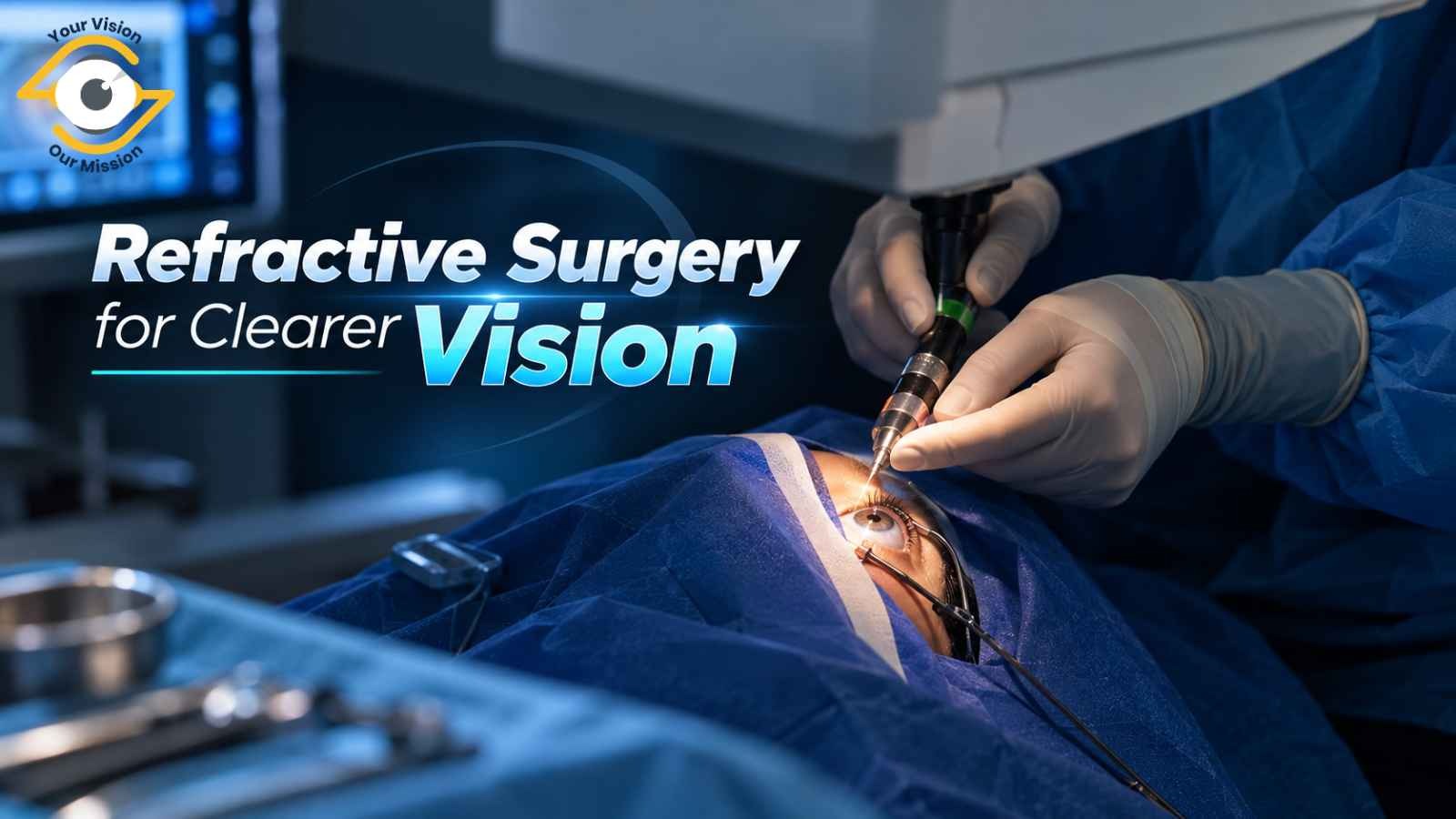
Glasses and contact lenses can effectively correct refractive errors, but some people prefer a long-term vision correction solution. This is where a refractive surgeon plays an important role. These specialists perform procedures designed to reduce dependence on corrective lenses by addressing problems such as myopia, hyperopia, and astigmatism.
If you are considering vision correction, understanding what a refractive surgeon does can help you make a more informed decision about your eye care.
What Is a Refractive Surgeon?
A refractive surgeon is an ophthalmologist with specialized training and experience in surgical procedures that correct refractive errors. Depending on the patient's eye health and prescription, treatment options may include LASIK, PRK, SMILE, or other advanced vision correction procedures.
Before recommending surgery, the doctor performs a comprehensive eye examination to determine whether the patient is a suitable candidate. Consulting the best refractive surgeon in Ahmedabad can help you understand which procedure may be appropriate for your individual needs.
What Does a Refractive Surgeon Do?
Vision correction surgery involves more than performing the procedure itself. A specialist is involved throughout the treatment journey, including:
Evaluating your prescription and eye health
Assessing corneal thickness, shape, and condition
Discussing suitable surgical options
Explaining potential benefits and risks
Planning the procedure based on individual measurements
Monitoring recovery through follow-up examinations
Choosing the best eye specialist in Ahmedabad is particularly important because a detailed evaluation helps identify potential factors that could affect surgical outcomes.
Which Conditions Can Vision Correction Surgery Address?
Refractive procedures are primarily designed to correct common refractive errors. These include:
Myopia: Distant objects appear blurry because light focuses in front of the retina.
Hyperopia: Close objects may appear blurred because light focuses behind the retina.
Astigmatism: An irregularly shaped cornea or lens causes blurred or distorted vision.
The suitability of surgery depends on factors such as prescription stability, age, corneal health, eye anatomy, and overall ocular health. The best refractive surgeon in Ahmedabad will evaluate these factors before recommending treatment.
Why Is a Comprehensive Evaluation Important?
Not everyone who wants to reduce their dependence on glasses is automatically a candidate for refractive surgery. Detailed diagnostic testing helps the ophthalmologist understand the condition of the cornea and other structures of the eye.
A consultation with the best eye specialist in Ahmedabad can also help you understand alternatives if laser vision correction is not appropriate. In some cases, options such as phakic intraocular lenses may be considered.
How Do You Choose the Right Surgeon?
Experience, appropriate training, modern diagnostic technology, transparent communication, and comprehensive follow-up care are important factors when selecting a specialist.
The best refractive surgeon in Ahmedabad should explain the procedure clearly, discuss realistic expectations, and help you understand both the advantages and possible risks.
Similarly, choosing the best eye specialist in Ahmedabad gives you access to professional evaluation and guidance tailored to your individual eye health.
Conclusion
A refractive surgeon does much more than perform vision correction surgery. From determining candidacy and selecting the appropriate procedure to monitoring recovery, the specialist plays an important role throughout the treatment process.
If you are considering vision correction, consult the best refractive surgeon in Ahmedabad and the best eye specialist in Ahmedabad for a detailed evaluation and personalized recommendation.
For expert guidance about refractive procedures and your available vision correction options, contact Dr. Sahil Shah and schedule a comprehensive eye consultation today.
Dr. Sahil Shah provides specialized ophthalmic care and personalized guidance for patients considering advanced vision correction procedures.